

Silicone Foam Dressing with Border
Why Choose Us
Technology
Integrating research, development, production, and sales of specialized medical care products.
Certificates
We have successively obtained CE, ISO13485 and FDA certifications.
Various Products
Acute wound care, chronic wound care, fixation care, medical assistant care products.
Best Service
Good after-sale service, handling the customer complaint and solve problem for customers.
What is Silicone Foam Dressing With Border?
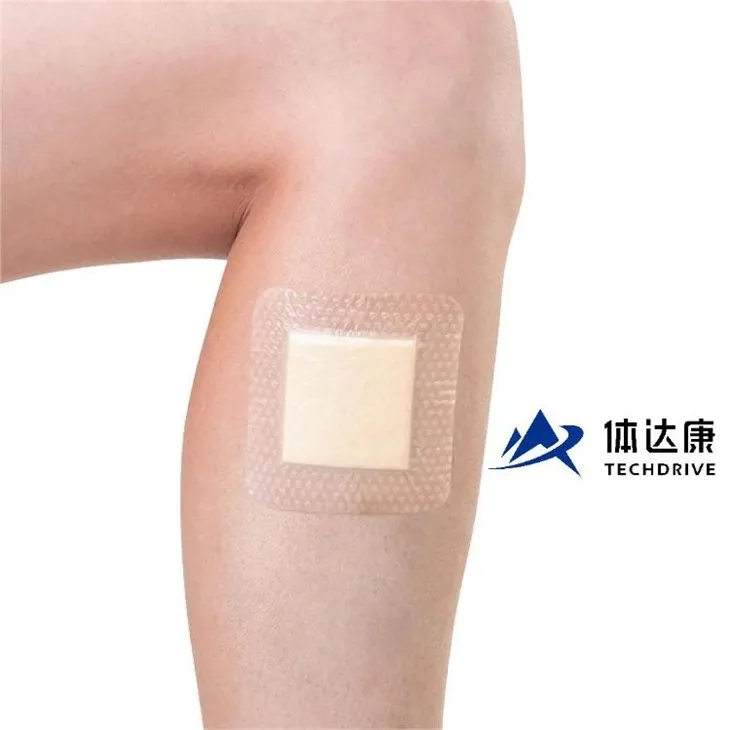
Silicone foam dressing with border is a type of wound dressing made from silicone rubber. Silicone foam dressing with border is a type of wound dressing that is designed to provide support and protection to wounds while they heal. Silicone foam dressing with border is sometimes also referred to as a silicone wound drape or silicone bandage.
-
![Soft Silicone Foam Dressing Border 7.5×7.5cm]() Soft Silicone Foam Dressing Border 7.5×7.5cmSoft Silicone Foam Dressing Border 7.5×7.5cm feature a five-layer structure: a gentle silicone layer, an absorbent core(two layers), a soft PU foam, and a breathable film. This design optimally...read more
Soft Silicone Foam Dressing Border 7.5×7.5cmSoft Silicone Foam Dressing Border 7.5×7.5cm feature a five-layer structure: a gentle silicone layer, an absorbent core(two layers), a soft PU foam, and a breathable film. This design optimally...read more -
![Silicone Foam Dressing for Bed Sores 18×18cm]() Silicone Foam Dressing for Bed Sores 18×18cmSilicone Foam Dressing for Bed Sores 18×18cm combine a soft silicone layer that sticks without causing pain, a super-absorbent element for locking in fluid, and a breathable yet waterproof shield....read more
Silicone Foam Dressing for Bed Sores 18×18cmSilicone Foam Dressing for Bed Sores 18×18cm combine a soft silicone layer that sticks without causing pain, a super-absorbent element for locking in fluid, and a breathable yet waterproof shield....read more -
![Border Self-adhesive Foam Dressing 10×10cm]() Border Self-adhesive Foam Dressing 10×10cmWith a five-part build, Border Self-adhesive Foam Dressing 10×10cm offer advanced wound care: a soft silicone contact layer, a super absorbent layer, a nonwoven layer, absorption foam, and a...read more
Border Self-adhesive Foam Dressing 10×10cmWith a five-part build, Border Self-adhesive Foam Dressing 10×10cm offer advanced wound care: a soft silicone contact layer, a super absorbent layer, a nonwoven layer, absorption foam, and a...read more -
![Waterproof Silicone Border Foam Dressing 12.5×12.5cm]() Waterproof Silicone Border Foam Dressing 12.5×12.5cmThe construction of Waterproof Silicone Border Foam Dressing 12.5×12.5cm incorporates a silicone contact layer, an absorbent pad, foam, and a waterproof yet breathable cover. These components work...read more
Waterproof Silicone Border Foam Dressing 12.5×12.5cmThe construction of Waterproof Silicone Border Foam Dressing 12.5×12.5cm incorporates a silicone contact layer, an absorbent pad, foam, and a waterproof yet breathable cover. These components work...read more -
![Optifoam Dressing with Border 15×15cm]() Optifoam Dressing with Border 15×15cmOptifoam Dressing with Border 15×15cm consist of a skin-friendly silicone layer, a potent absorbent section, a comfortable foam layer, and a permeable film. This combination promotes swift...read more
Optifoam Dressing with Border 15×15cmOptifoam Dressing with Border 15×15cm consist of a skin-friendly silicone layer, a potent absorbent section, a comfortable foam layer, and a permeable film. This combination promotes swift...read more -
![Silicone Foam Dressing for Heel 15×22cm]() Silicone Foam Dressing for Heel 15×22cmFeaturing a composition of a silicone adhesive, an absorption layer, cushioning foam, and a moisture-regulating film, Silicone Foam Dressing for Heel 15×22cm are pivotal in rapid wound recovery....read more
Silicone Foam Dressing for Heel 15×22cmFeaturing a composition of a silicone adhesive, an absorption layer, cushioning foam, and a moisture-regulating film, Silicone Foam Dressing for Heel 15×22cm are pivotal in rapid wound recovery....read more


One of the major advantages of using silicone foam dressing with border is that it offers excellent absorption and retention capabilities. The foam pad absorbs exudate from the wound bed, reducing the risk of infection and promoting faster healing. The adhesive border secures the dressing in place and prevents any leakage, which is especially useful for wounds with heavy exudate.
Silicone foam dressing with border also provides a moist wound environment, which is crucial for optimal wound healing. The moist environment helps to promote angiogenesis, collagen synthesis, and granulation tissue formation. This type of dressing is particularly useful for chronic wounds, such as pressure ulcers, venous leg ulcers, and diabetic foot ulcers, which require a moist wound environment to heal.
In addition to its excellent wound healing capabilities, silicone foam dressing with border is also easy to apply and remove, making it a convenient option for both patients and healthcare providers. The dressing can be easily trimmed to fit the wound size and shape, and the adhesive border ensures a secure and comfortable fit.
Absorption and Exudate Management: The foam layer of silicone foam dressing has excellent absorption capacity, effectively managing high levels of exudate produced by wounds. It absorbs and retains exudate, reducing the risk of maceration and creating an optimal moist wound environment for healing.
Moisture Balance: Silicone foam dressing maintains a balance between moisture vapor transmission and absorption. It helps prevent wound dehydration while preventing excessive moisture buildup, promoting an ideal healing environment.
Micro-adherence and Pain Reduction: The soft silicone adhesive layer of silicone foam dressing adheres gently to the surrounding skin, forming a secure yet atraumatic seal. This minimizes pain and trauma during dressing changes, enhancing patient comfort and compliance.
Silicone foam dressing is a valuable tool in wound care, providing advanced absorption, exudate management, and moisture balance. Its multi-layered design combines foam and silicone properties to create an optimal healing environment.
Composition And Usage Of Silicone Foam Dressing With Border
Ingredients of silicone foam dressing
Silicone foam dressing is a binary foam dressing, that is, it's composed of un-polymerized liquid silicone and liquid catalyst. The two ingredients are packed separately and stored in cold rooms.
Usage of silicone foam dressing
Let it meet the room temperature before using to avoid delaying the formation of foam. The silicone deposited in the can bottom should be stirred evenly while using. Estimate the dosage according to the size of the wound, draw out the two ingredients with a syringe and mix them in a small bowl in proportion as required, and stir them vigorously with a wooden dispensing knife for 15 seconds until a foamy polymerization formed. It can be used in 1-2 minutes, pour the silicone adhesive foam dressing into the wound, and the volume would expand to four times quickly and fills the wound. After 2 to 3 minutes, it will harden and form a flexible spongy dressing.
Action principle of silicone foam dressing
After the liquid silicone is mixed with the liquid catalyst, hydrogen is released in a chemical polymerization under the action of silicone compounds with catalysts, let it foam and form a polymer with foam structure.
Precautions for silicone foam dressing
The liquid silicone and catalyst must be prepared accurately according to the proportion and instructions, otherwise the physical and fluid mechanical properties of the foam dressing will be changed. While disposalling wounds, the polymer should be freely flowing into rather than scraped into the wound to avoid forming a hard clot in the dressing film, because the scraping process might destroy the bubbles in the polymerization. If the dressing membrane is too hard, the patient might feel uncomfortable and might extend the wound healing time or have complications of compression necrosis.
♂Evaluate the surrounding skin before using to determine if a skin protection product is necessary to be used;
♂Choose the right size, which the absorption part should be about 2 cm beyond the wound;
♂Select specifications of dressings according to the amount of exudates and manufacturer parameters;
♂For awkward anatomical sites, the dressing can be cut, but must be properly fixed. Make sure the sizes of the silicone absorbent dressing after cutting is larger than the area of the wound;
♂Select suitable products with adhesive edges. If using a foam dressing with adhesive edge, make sure the foam silicone dressing is used for a long time enough, because the dressing will become less sticky over time, it will reduce the risk of stretching damage to the skin when the dressing is removed, so adhesive dressings should be avoid to be changed frequently;
♂For fragile peripheral skin that is vulnerable, it can consider dressings with silicone adhesive edges;
♂Foam dressings removing should be atraumatic. If the dressing is adhered to the wound, then the moisture of the wound bed is insufficient and the wound should be re-evaluated;
♂The foam silicone absorbent dressing can be used for a long time, when the exudate imprinting is close to the edge of the absorption part (1-2 cm), it should be replaced in time;
♂The foam dressing can be used for at least three days and up to seven days. If the exudate is too much, it must be replaced daily, it is better to choose a more absorptive dressing;
♂When removing foam dressings with sticky edges, make sure don't tear it directly backwards. On the contrary, one hand should be held on the one side of the silicone foam adhesive dressing while the other hand pulls horizontally on the dressing and slowly uncovers the dressing; If necessary, use warm water at first;
Characteristics of silicone foam dressing
Silicone foam dressing has the characteristics of absorbing exudate, excreting chloride ions, being waterproof and anti-oxidation, antibacterial and anti-pollution, etc., and is more suitable for patients with wet trauma.
Absorb exudate
Silicone foam dressings can quickly absorb wound secretions and lock them inside the dressing, thereby maintaining a moist environment in the wound and promoting healing.
Excretion of chloride ions
Silicone foam dressing has good chloride ion excretion effect, which can improve the wound environment and prevent the occurrence of infection.
Waterproof and anti-oxidation
Silicone foam dressing is waterproof and anti-oxidation, and will not expose wet wounds to external contamination and oxidation.
Antibacterial and anti-pollution
The surface of the silicone foam dressing is coated with a layer of antibacterial agent, which has good antibacterial and anti-pollution capabilities, greatly improving the treatment effect.
Application of silicone foam dressing
Silicone foam dressings are suitable for various types of wet wounds, such as burns, scalds, skin ulcers, postoperative wounds, etc.
Silicone foam dressings can also be used as preventive dressings, often after surgery to protect the surgical site from infection and contamination.

Construction And Features Of Silicone Foam Dressing With Border
Made of semipermeable polyurethane, foam dressings contain foamed polymer solutions with small, open cells that can hold fluids. These cells may be layered with other materials. Their absorptiveness varies depending on the thickness of the dressing. The contact area of a foam dressing is nonadherent and nonlinting, so the dressing is easy to remove. The outer layer of the dressing is often hydrophobic or waterproof to keep out bacteria and other contaminants. Foam dressings come either with or without an adhesive border and in many sizes and shapes. Some foam dressings also include a bacterial barrier made from a transparent film.some foam dressings are impregnated with an antimicrobial agent such as silver, Manuka honey, cadexomer iodine, antibiotics, or include surfactants as a vehicle for delivery of these substances to the wound bed.
A primary feature of Silicone Foam Dressing With Border is that they help maintain a moist wound environment. Also important is that foam helps cushion the wound and periwound area from additional trauma, as well as providing thermal insulation for wounds. Easy to apply and remove, foam dressings don't cause wound trauma. Foam dressings can be used when there is an infection and during compression therapy. In addition, foam dressings are compatible with enzymatic debridment agents. Depending on the amount of exudate, foam dressings have a wear time of one to seven days.
What are the main benefits of Silicone Foam Dressing With Border for skin tears?
Silicone adhesives reduce trauma during skin tear dressing changes
Studies show that patients who experience more pain than expected during a procedure can lose trust in clinicians and carers. This often leads to anxiety, stress, and fearfulness.
The type of adhesive used in dressings is one of the most important aspects of skin tear treatment. Unlike dressings with acrylic adhesives, silicone adhesives do not dry out and instead remain tacky. This ensures ease of removal as the silicone adhesive does not stick aggressively to the wound bed.
Silicone dressings are flexible and conformable
Skin tears can happen anywhere on the body, including the knees and the elbows. These are parts of the body where there are not only protruding bones, but also increased movement, which can both disturb the position and integrity of a dressing.
Silicone dressings, particularly soft silicone wound contact layers, tend to be made of a thin and flexible mesh. This means that they conform well to the body contours that prove more difficult for foam dressings to adhere to. This ensures comfortable wear in different parts of the body and minimises apulling on the delicate skin around the wound.
Silicone dressings enable smart exudate management
All skin tears display varying degrees of tissue damage. In cases where there is blood and exudate, it is important to prevent it from collecting under the flap and minimise leakage into the periwound area.
The porous structure of a silicone wound contact layer allows for exudate to pass through to a secondary dressing and be cleaned easily. This reduces the risk of maceration and infection, and promotes timely healing.
Silicone dressings offer transparency
Skin tears are wounds that can be closed by primary intention, provided that the integrity of the flap is maintained. This requires the flap to be realigned and remain in a fixed position throughout the healing process.
Since the silicone wound contact layers recommended for skin tears are transparent, they allow clinicians to observe and monitor skin tears during wear. This can be done by simply taking off any bandages or secondary dressings that may have been applied to absorb any fluid while ensuring that the flap remains undisturbed.
Silicone dressings are cost-effective in the long-term
Healthcare professionals may be reluctant to use silicone dressings in all situations where they are appropriate due to the higher upfront costs they incur.
Wound contact layers are considered atraumatic dressings because they reduce pain during dressing removals. This limits the need for anaesthesia or analgesia, which leads to extra costs for healthcare providers.
Certifications


Our Factory

We have standard purification workshops, professional production equipment and perfect physical and chemical, sterile laboratory. Since our establishment, we have successively passed the ISO13485:2016 international quality system certification, the CE certification from Germany TÜV company, and the FDA certification from the United States Food and Drug Administration. While our products cover the Chinese market, we have also begun to enter overseas markets such as Western Europe, North Amedica, South America, North Africa, and Southeast Asia.
FAQ
As one of the most professional silicone foam dressing with border manufacturers and suppliers in China, we're featured by good service and low price. If you're going to wholesale high quality silicone foam dressing with border, welcome to get free sample from our factory. Also, customized service is available.
18 18cm sacrum foam dressing with silicone border, absorbent foam dressing heel 6 9, optifoam border dressing bed sore 7 7